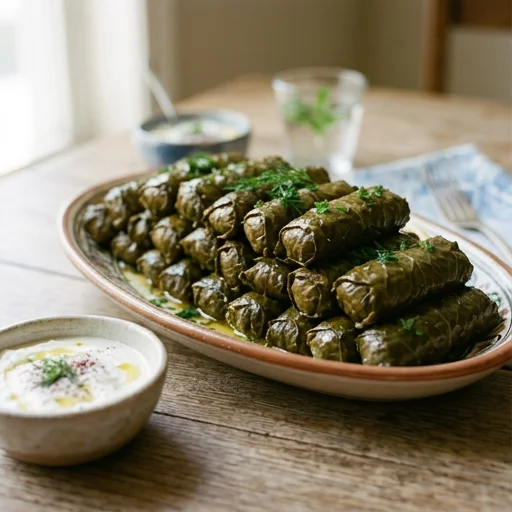
A Leaf with Deep Roots
In the past, almost every house in Palestine had a trellis at or near the entrance, and grapevines were planted on it to benefit from its leaves and fruit. Palestine is famous for its grape cultivation, and this dish is one of its most beloved expressions.
While many countries use the name “dolma” for stuffed grape leaves, in Egypt they’re called “mahshi al-‘inab”, and in Palestine, “warak dawali” — literally meaning “vine leaves.”
🫙 If you can’t source fresh leaves from a backyard vine, jarred leaves work beautifully. We use Al Afiya.
About This Dish
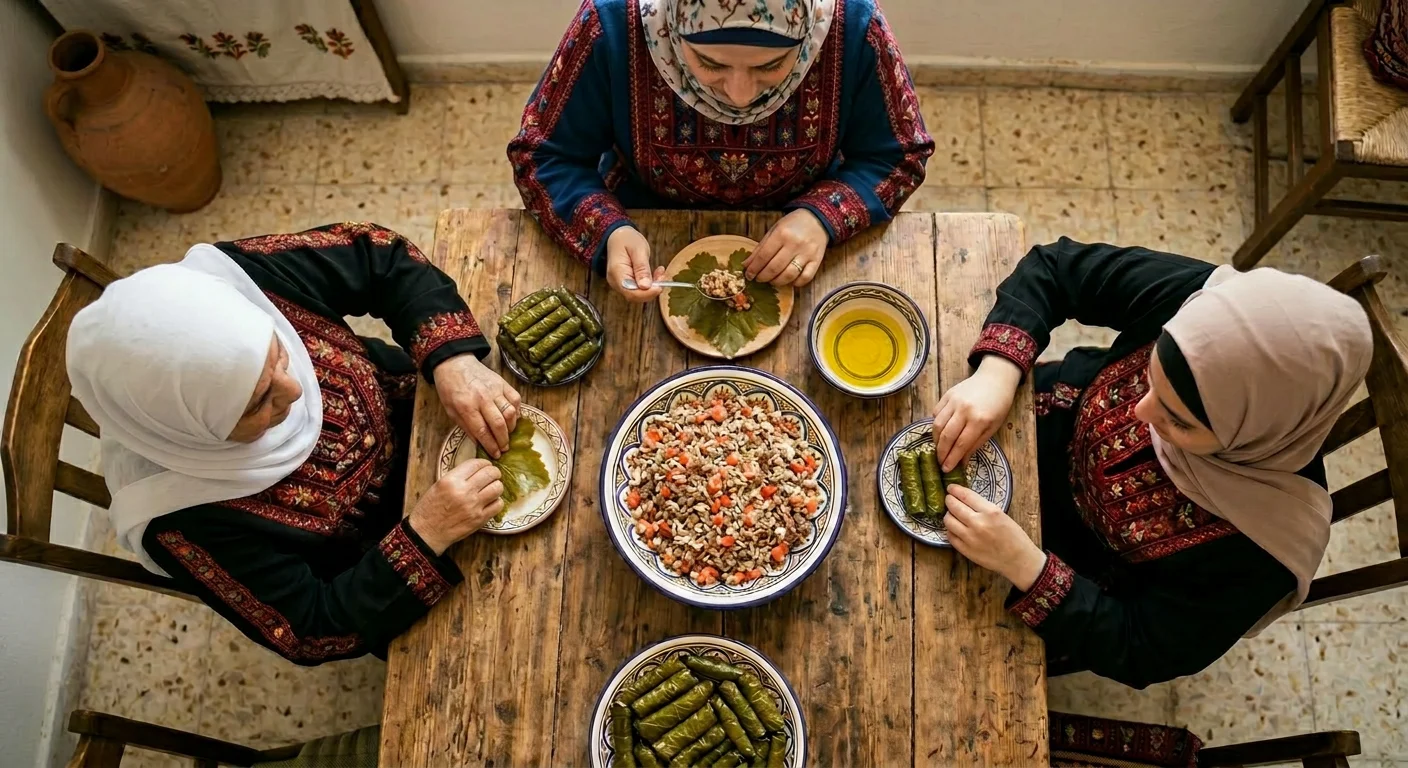
- 🍇 A communal ritual. This dish is traditionally prepared by two or more people sitting together, rolling and talking — about family, politics, and life.
- 🌿 Fresh or jarred. In the Levant, leaves are often picked fresh from homegrown vines. In the West, jarred leaves from Mediterranean grocery stores are the standard substitute.
- 🐑 Hidden treasure. Lamb chops and potatoes line the bottom of the pot, absorbing all the cooking juices — revealed only when the pot is flipped onto the platter.
The Story
In the past, almost every house in Palestine had a trellis at or near the entrance, and grapevines were planted on it to benefit from its leaves and fruit. Grapes are grown all over the world, but Palestine is famous for grape cultivation. While many countries use the name and variations of “dolma” for stuffed grape leaves, in Egypt, they’re called “mahshi al-‘inab”, and in Palestine, “warak dawali”, literally meaning “vine leaves.”
Very often in the Levant, the leaves are picked fresh from homegrown vines. This dish is customarily prepared by two or more people sitting at the table, tightly rolling a mixture of rice and minced meat in thin, delicate grape leaves while having conversations about family, politics, and life in general.
Sitting together, rolling leaves, talking about everything and nothing — this is what warak dawali is really about.
If you can’t source fresh leaves from a backyard vine, jarred leaves work beautifully — we use Al Afiya.
Vegan & Vegetarian Versions
Omit the ground meat and lamb chops entirely. For the filling, try one of these:
- Mix the rice with diced tomatoes and finely chopped fresh parsley — bright, simple, and classic.
- Mix the rice with a mild, fresh salsa (pico de gallo) found in the produce section of your local supermarket — an easy, flavorful shortcut.
How to Make It
Blanch the grape leaves
Boil water in a large, heavy, deep pot. Drain the jar of grape leaves, then remove, unwrap, and separate the leaves. Place the leaves in the boiling water and blanch for 3–4 minutes to soften them and remove some of the brine's saltiness. Remove the leaves from the water and set aside, allowing them to cool on a large tray.
Brown the lamb chops
Season the lamb chops with salt and black pepper on both sides, then place them in a Dutch oven or baking pan and bake at 425°F until browned on both sides, about 10 minutes per side. They don't need to be fully cooked through at this stage — they'll finish cooking in the pot. Set aside to cool at room temperature.
Make the filling and layer the pot
Mix the rice with all the stuffing spices, olive oil, and ground meat. Arrange the browned lamb chops in a single layer at the bottom of the pot, followed by the potatoes and half of the tomato slices.
Roll and arrange the leaves
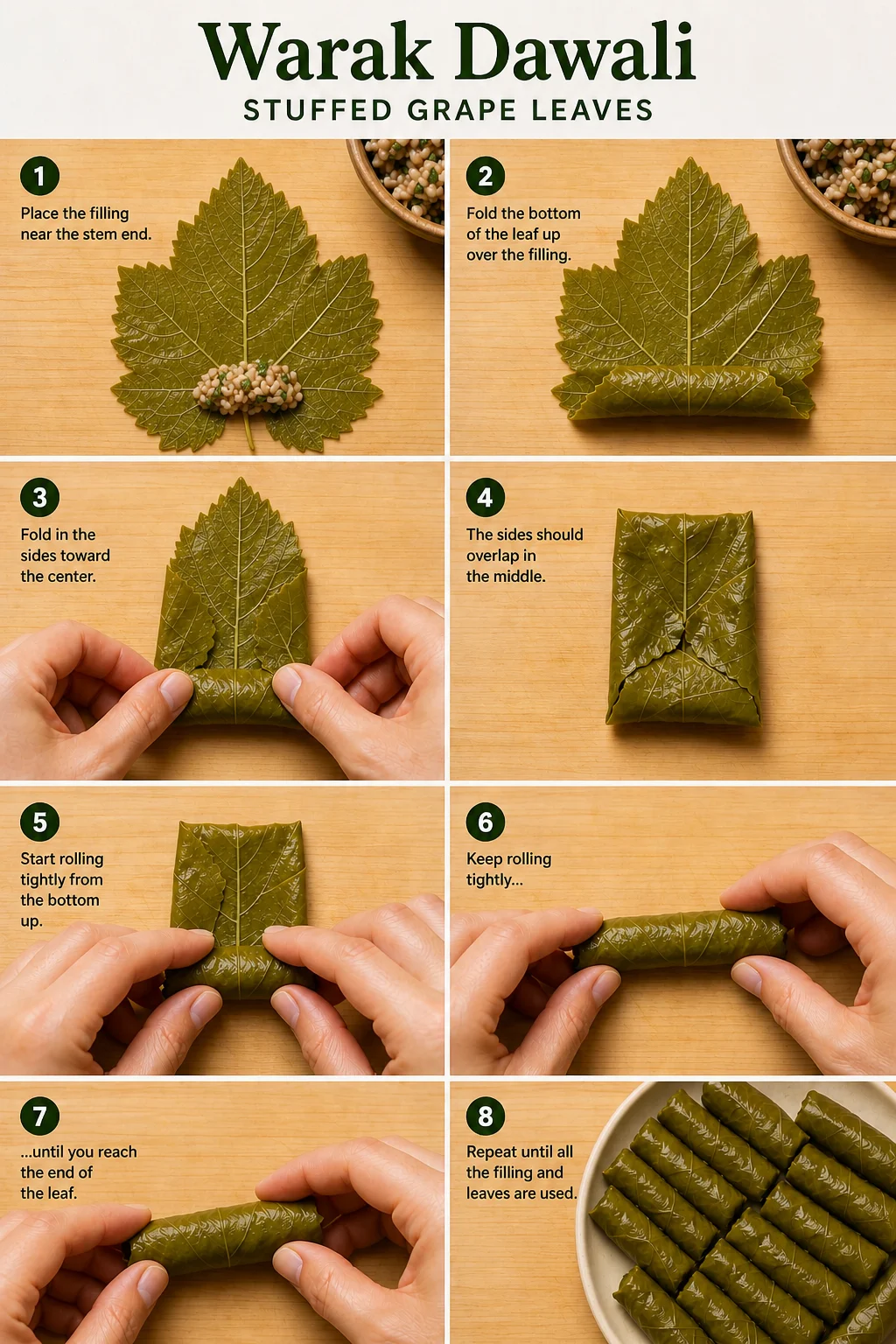
Lay one leaf at a time on a clean surface with the vein side up and the widest part — the base — closest to you. Place a small amount of the rice and meat mix (about the size of your thumbnail) on the leaf at its base. Roll beginning from the base and rolling away from you, folding in the edges before completing the roll. You're looking for as tight a roll as you can get, but it takes practice — don't beat yourself up over it on your first try. Arrange the rolls tightly side by side in the pot, one layer at a time. Place the remaining tomato slices between random layers as you go.
Cook low and slow
Add boiling water to the grape leaves until they are fully covered by about an inch of water. Place a heavy plate on the top layer to keep the grape leaves from moving or breaking while cooking. Bring to a boil, then reduce the heat to low and simmer, covered, for 30 minutes before adding the lemon juice. Cover again and continue simmering for another 30 minutes until cooked through — about 60 minutes total. Allow to rest for 30 minutes.
Flip and serve
Remove the plate from the top layer, then flip the pot upside down so the contents fall onto a large serving platter, giving easy access to the wonderfully flavored lamb chops and potatoes that were hiding at the base of the pot.