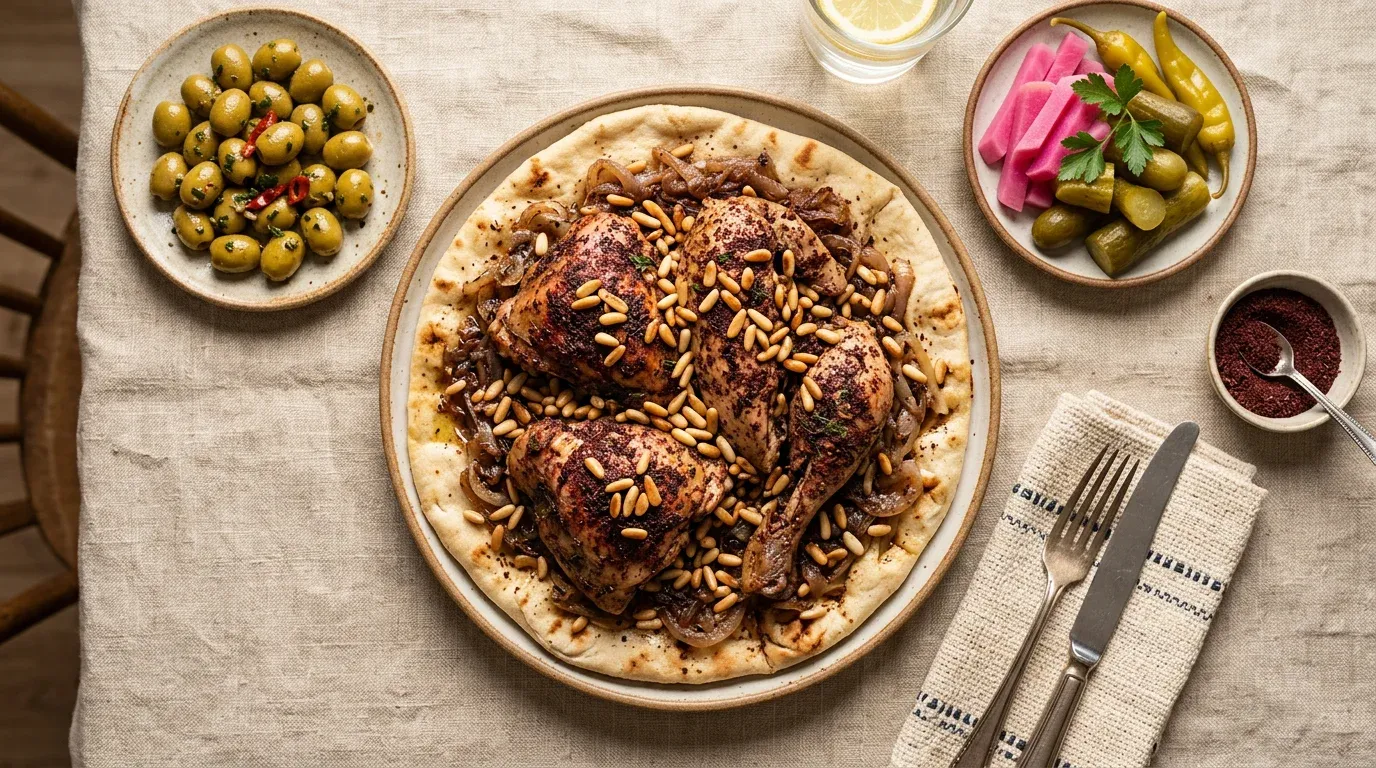
A Word About Taboon Bread
Taboon bread is a traditional Palestinian flatbread known for its soft, chewy texture and dimpled surface. Named after the clay oven, the taboon, in which it was traditionally baked, it has no hollow pocket like pita. It is the foundation of Musakhan, and it absorbs the olive oil and sumac juices in a way no other bread can.
The taboon oven was traditionally made of clay and straw: round and deep, lined inside with stone slabs called raghf. Bread was baked in large quantities, enough for a whole week, then stored in a basin and covered with a blanket. When it dried and hardened, it was dipped in lukewarm water, brushed with olive oil, and reheated. This is precisely why the dish is called Musakhan, Arabic for heated up or reheated.
Today, you can find taboon bread ready-made at your local Middle Eastern grocery store or bakery. No clay oven required.
The Story
Musakhan is widely regarded as the national dish of Palestine. Its roots are in the land itself, specifically in the olive harvest, the most important agricultural event of the Palestinian year. Families would gather to harvest the olives, press them into fresh oil, and then cook Musakhan to celebrate the first pressing. The dish was born to honor that oil.
The word Musakhan means “reheated” in Arabic, a name that carries the memory of taboon bread revived with water, olive oil, and fire, and the generosity of feeding a whole village from a single pot.
The combination of sumac, caramelized onions, and olive oil soaking into warm taboon bread, with roasted chicken laid on top and pine nuts and almonds scattered over everything, is one of the great dishes of the world. It is communal food: meant to be eaten with hands, shared from a single large tray, and enjoyed loudly.
How to Make It
Boil the chicken
Place the five chicken thighs in a large pot and cover with water. Add cardamom pods, cinnamon sticks, and salt. Bring to a boil, skimming any foam. Simmer until the chicken is fully cooked through and tender. Remove the chicken and set aside. Reserve the broth for another use; it is too good to waste.
Caramelize the onions
Slice five onions and fry them in a generous amount of olive oil over medium heat, stirring occasionally, until deeply golden and soft. This takes patience, around 25 to 30 minutes. Do not rush this step. The onions are the soul of the dish. Season with salt and a generous amount of sumac.
Make the sumac oil
Mix sumac with a good amount of olive oil to create a thick, fragrant paste. Brush this mixture generously all over the boiled chicken thighs, coating every surface. This gives the chicken its deep crimson color and the dish its defining flavor.
Layer the taboon bread
Place the taboon bread in a large baking dish. It should cover the base fully; use more than one piece if needed. Spread the caramelized onions and sumac evenly over the bread. The bread will begin to absorb the olive oil and onion juices, which is exactly what you want.
Add chicken and bake
Place the sumac-brushed chicken thighs on top of the onion-covered bread. Bake in a preheated oven at low heat, around 180°C / 350°F, for 30 minutes, until the chicken is golden and fragrant and the bread has soaked up all the juices.
Garnish and serve
Remove from the oven and scatter toasted pine nuts and almonds generously over the top. Serve directly from the baking dish, or transfer to a large communal tray. Accompany with Arabic salad, yogurt, or any sides you like. Eat with your hands. This is that kind of meal.