A Dumpling With Deep Roots
Shish Barak is a dish that refuses to stay in one place. Variations of it appear across the Levant, Turkey, Central Asia, and the Iranian highlands — each culture claiming it, naming it, and cooking it in their own way. In Jordan it is a staple of winter; in Lebanon it goes by similar names; in Iran it is called joshpara.
Most food historians point to Uzbekistan as the likely origin of this dumpling family, from which it traveled westward along trade and migration routes. The name “shish barak” is believed to descend from the ancient Persian joshpara — a word that itself transformed after the 10th century into gosh e-barreh. Whatever its passport says, it has been Palestinian for a very long time.
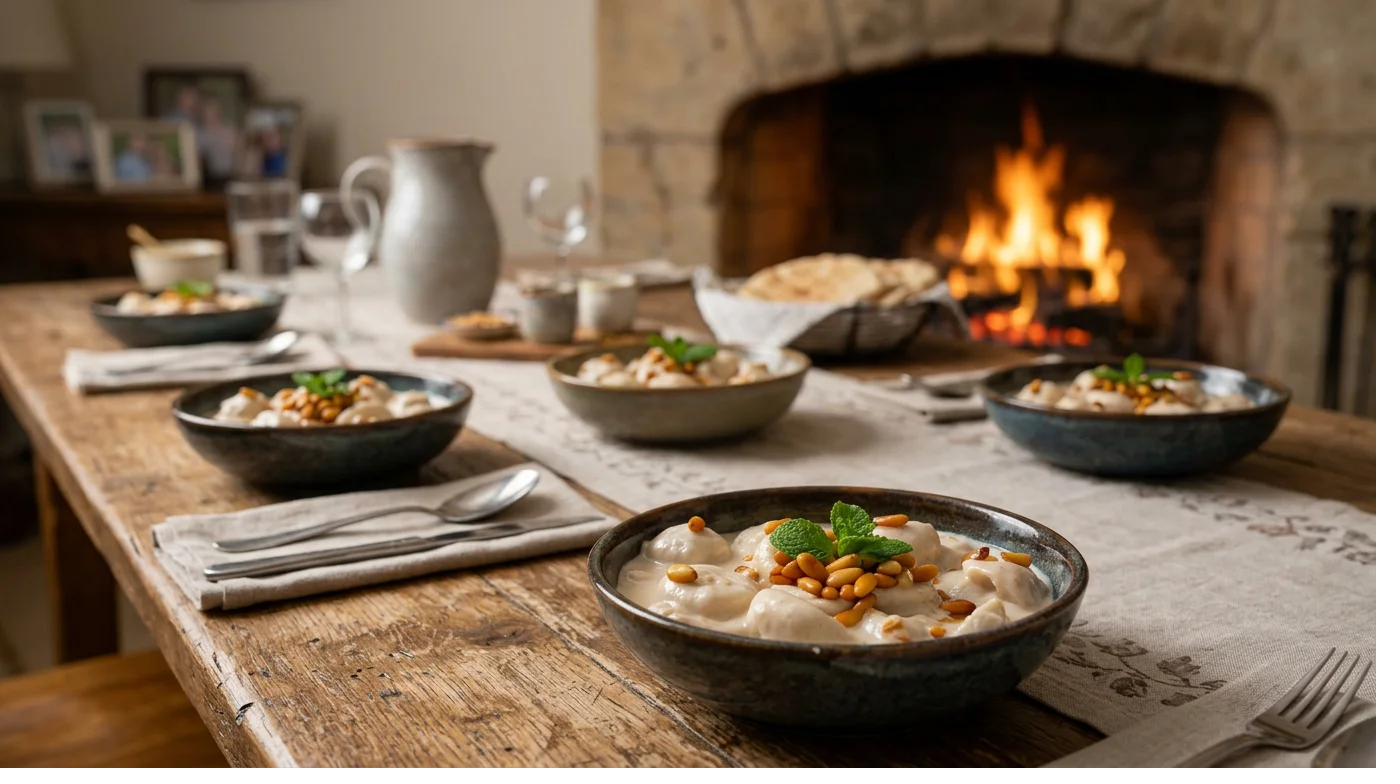
❄️ Shish Barak is traditionally considered a winter dish — heavy, warming, and deeply filling. It is the kind of meal made for cold evenings and full tables.
About This Dish
- 🫙 The yogurt sauce is stabilized with cornstarch so it won’t break when heated — a technique used across Levantine cooking.
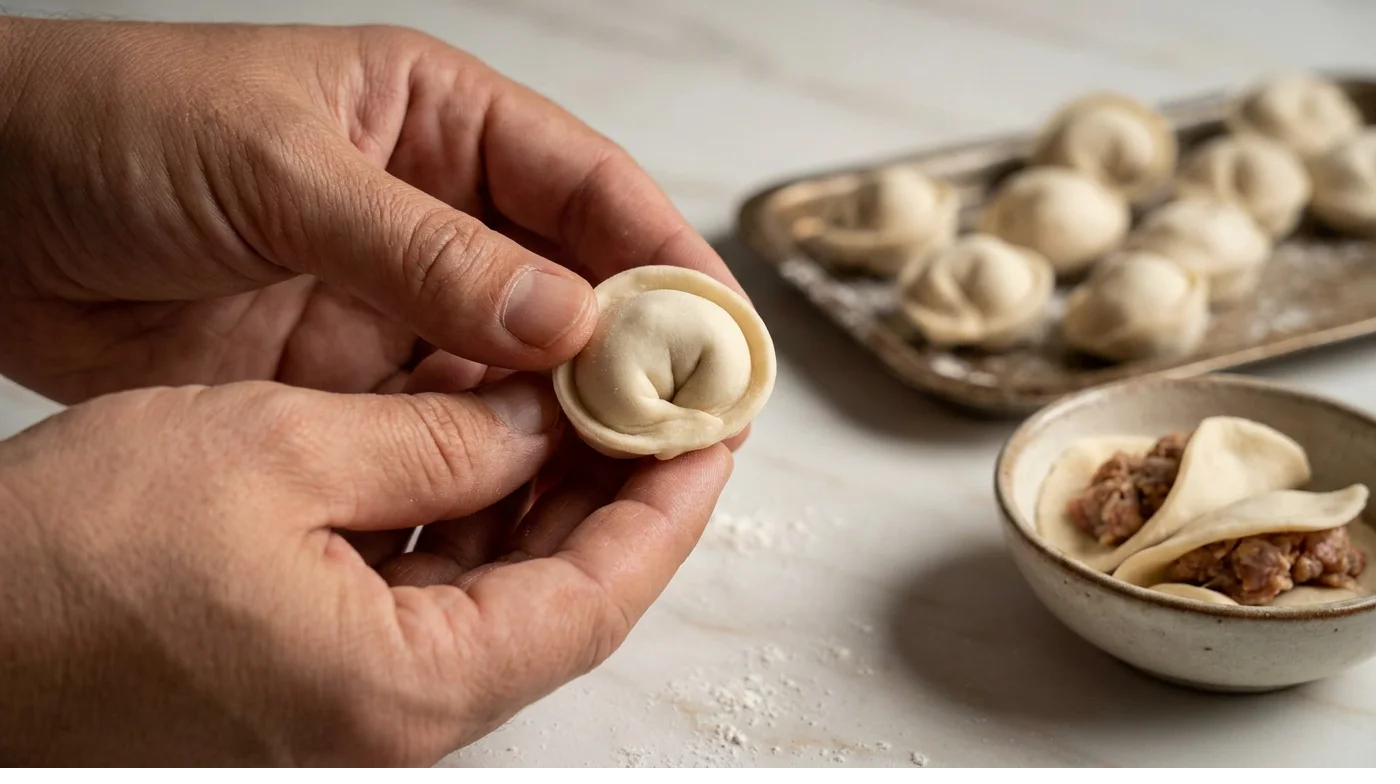
- 🥟 The shape — half-moon folded into a ring — is the classic Palestinian form. Other countries may fold theirs differently.
- 🔥 Three ways to cook it: oven-baked, fried in oil, or simmered directly in yogurt or tomatoes. This recipe uses the oven-then-yogurt method.
- 🛒 Seven spice (or five spice) can be found at any Middle Eastern grocery store. Alternatively, combine allspice, nutmeg, and cinnamon.
The Story
Shish Barak is a popular dish across the Levant — and it is, without question, a classic of the Palestinian kitchen. At its core, it is a simple idea: spiced ground meat wrapped in a thin dough, cooked in a tangy yogurt sauce. But that simplicity is deceptive. The construction of each dumpling is careful work. The yogurt sauce demands attention. The result, when done well, is something that tastes like it has been cooking for centuries — because it has.
Its origins are debated, its name has changed across continents — but on a cold Palestinian winter night, Shish Barak is simply home.
The dish is generally considered a winter preparation, and with good reason. The thick yogurt sauce warms the stomach; the spiced meat filling heats from within. It is a meal that takes time — the dough must rest, the filling must be browned, the dumplings shaped one by one — and that time is part of what makes it feel like an occasion. In many Palestinian families, Shish Barak is a communal project: hands at the table, circles of dough, the rhythm of filling and folding.
How to Make It
Make the dough
Combine 3 cups of all-purpose flour and 1 teaspoon salt in a large mixing bowl. Slowly add 1 cup of warm water, then pour in ¼ cup of olive oil. Knead until you reach a smooth, elastic dough — about 8 to 10 minutes by hand. Cover with a clean hand towel and set aside for 30 minutes to rest. The rest is important: it relaxes the gluten and makes the dough much easier to roll thin.
Cook the meat filling
Heat a pan over medium-high. Add a drizzle of olive oil and the two finely chopped onions. Sauté until they are soft and beginning to caramelize — about 10 minutes. Add 1 lb of minced beef, lamb, or a mix of both, along with 1 teaspoon each of black pepper and seven spice. Cook, stirring, until the meat is fully browned and any liquid has evaporated. Set aside to cool slightly before filling.
Roll and cut the dough
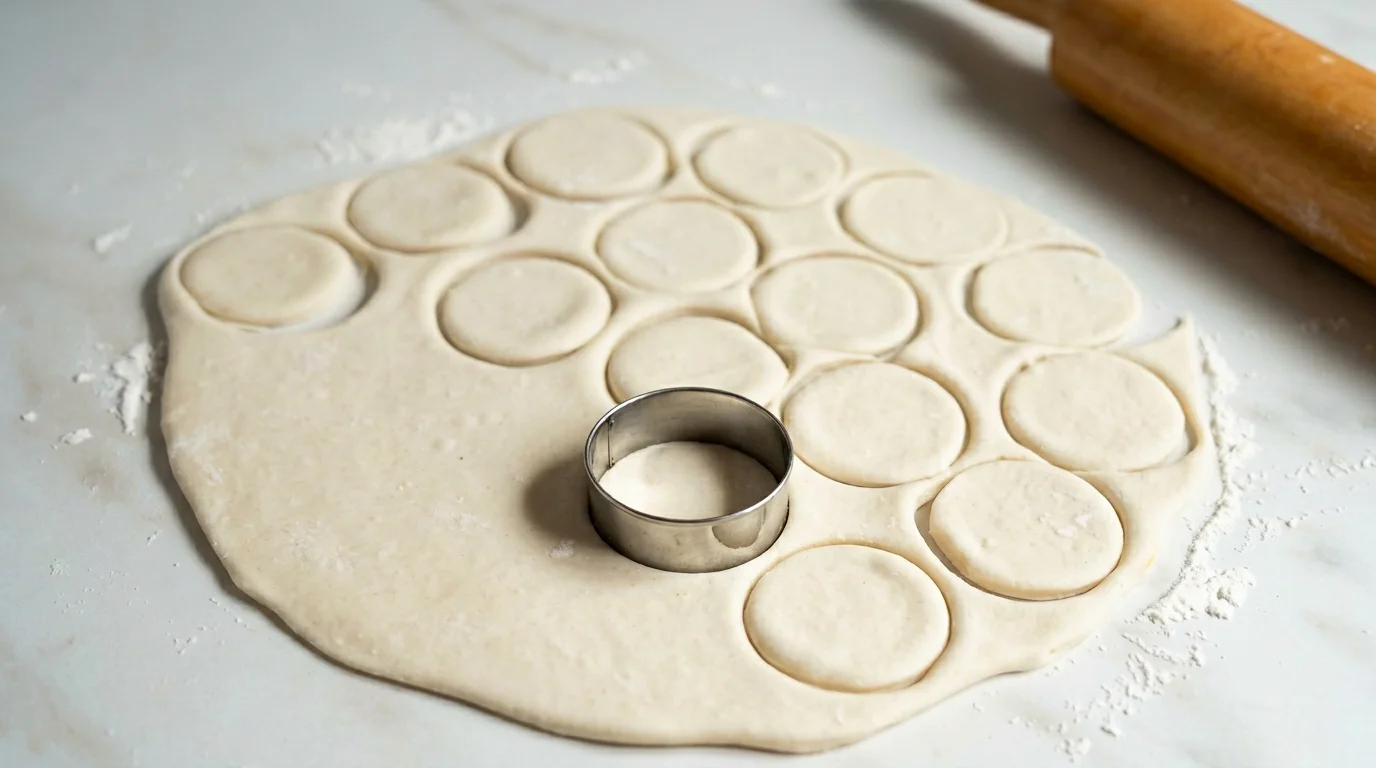
Dust a clean surface lightly with flour. Using a rolling pin, roll the dough to approximately ⅛ inch thick — thin enough to cook through in the yogurt, but sturdy enough to hold the filling. Use a circular cutter or the rim of a glass to cut the dough into small circles.
Fill and shape the dumplings
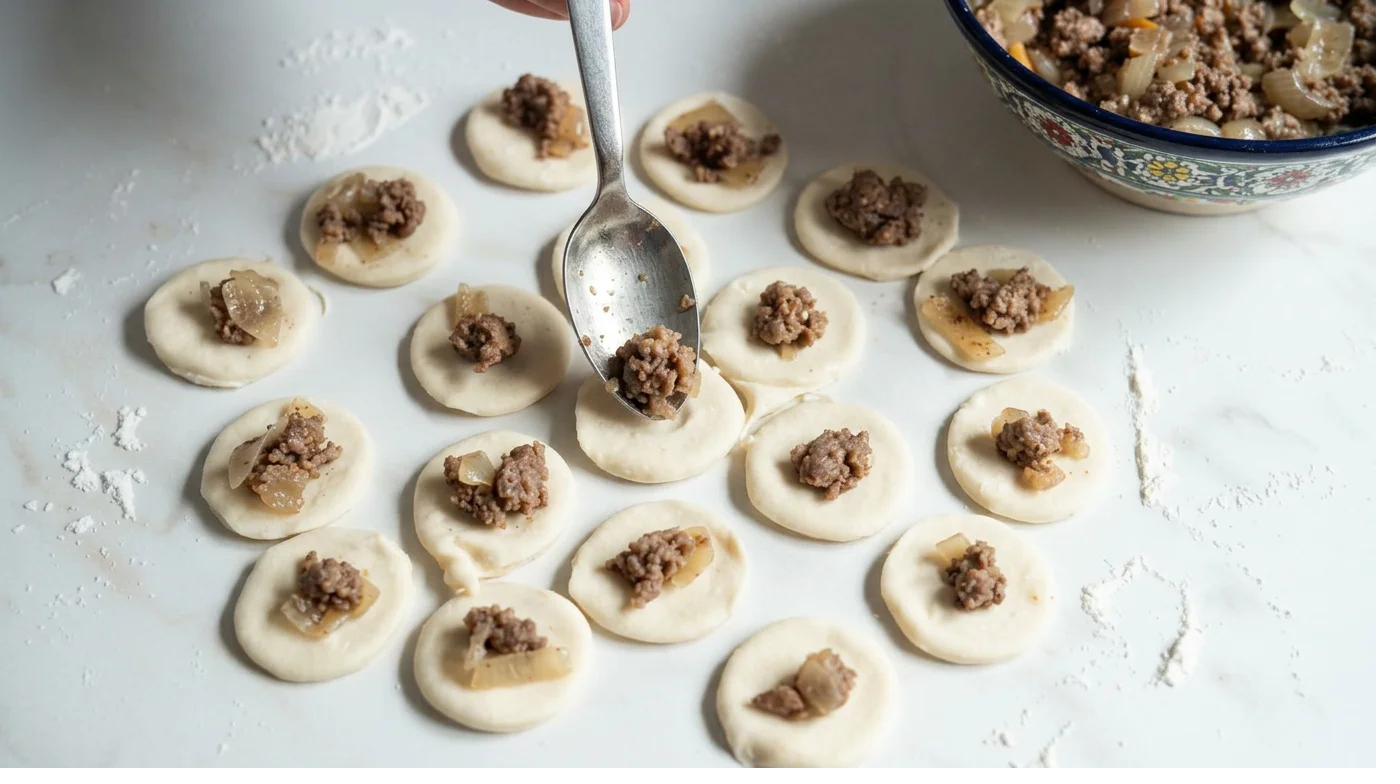
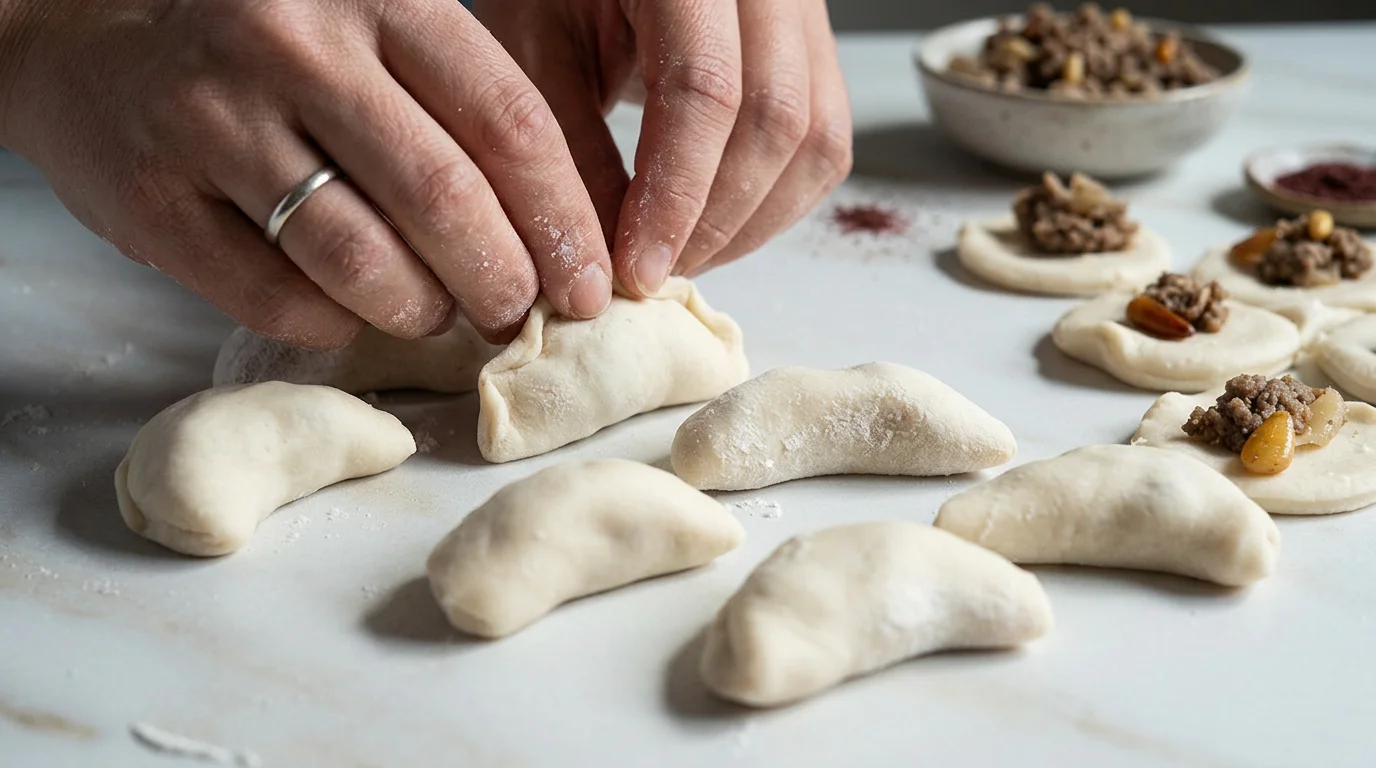
Place a small spoonful of the meat filling at the center of each dough circle. Fold the circle in half over the filling and pinch the edges firmly together to form a half-moon. Then bring the two pointed ends of the half-moon together and press them to create a ring shape — this is the classic Shish Barak form. Work through all of the dough circles.
Bake until golden
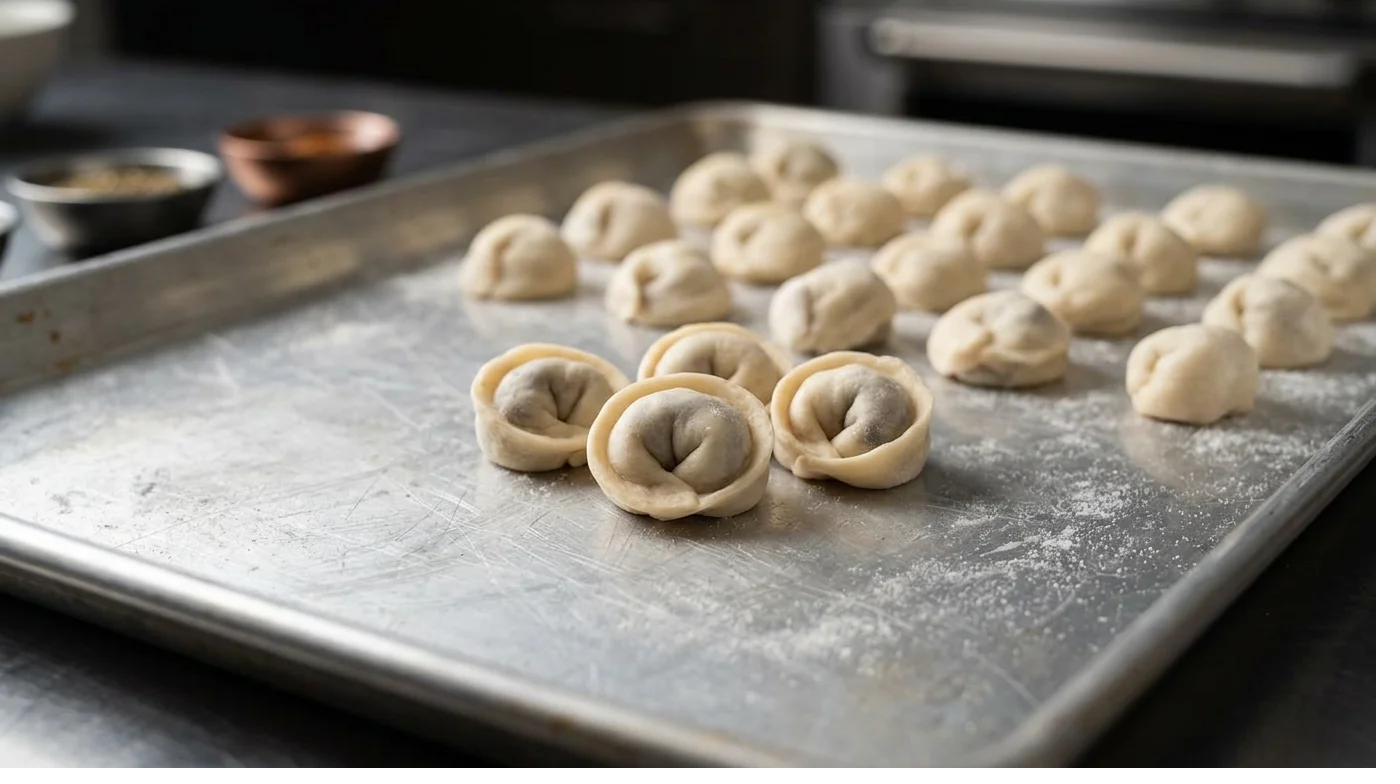
Arrange the shaped dumplings on a lightly greased baking sheet. Bake at 400°F for about 10 minutes, or until they are golden brown on the outside. Baking first gives the dumplings their structure and a light color before they finish cooking in the yogurt sauce.
Make the yogurt sauce
Pour 1 quart of plain yogurt into a heavy-bottomed pot. Stir in 1 tablespoon of cornstarch and 1 teaspoon of salt — the cornstarch is essential, as it stabilizes the yogurt and prevents it from breaking when it comes to a boil. Stir constantly over medium heat in one direction until the yogurt reaches a gentle boil. In a separate small pan, heat 1 tablespoon of ghee and fry 5 finely chopped garlic cloves until fragrant and lightly golden. Add the garlic and ghee into the yogurt sauce.
Finish the dumplings in the yogurt
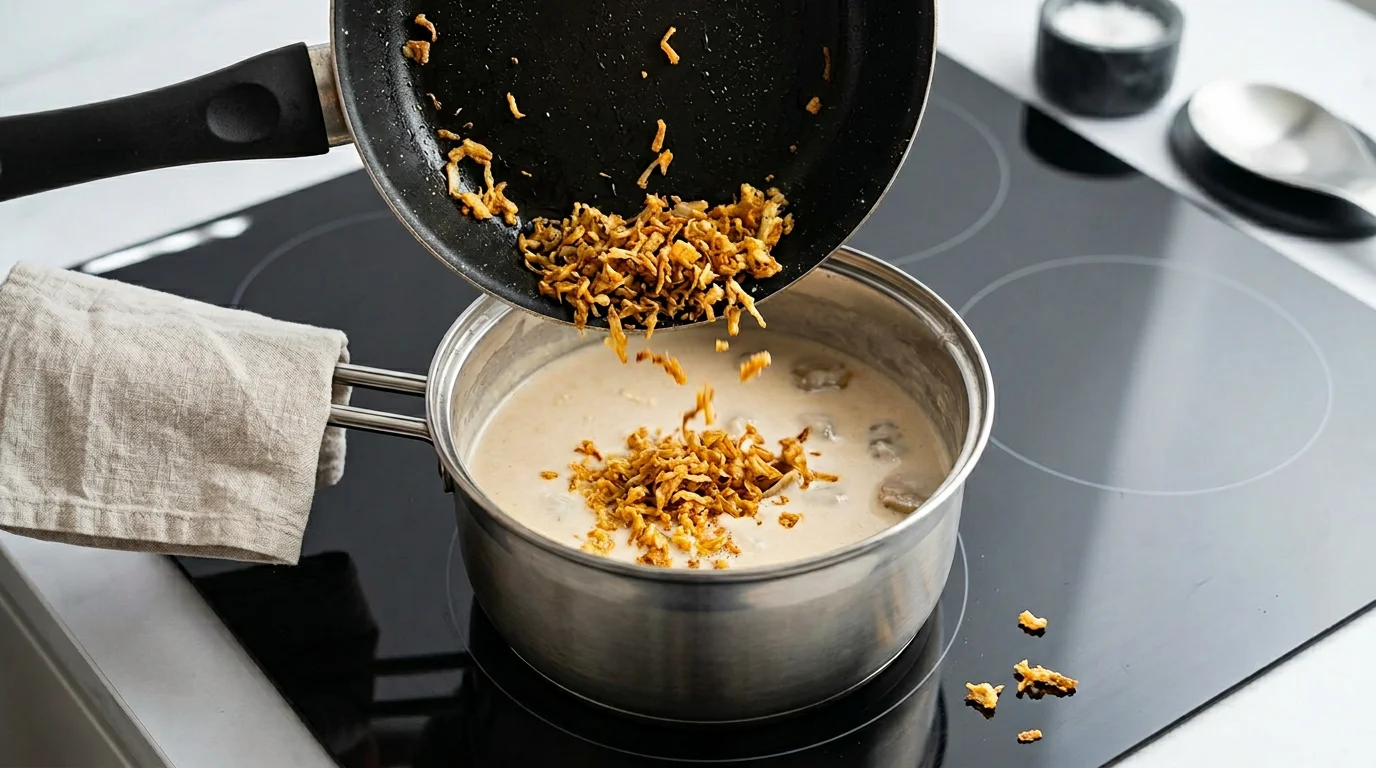
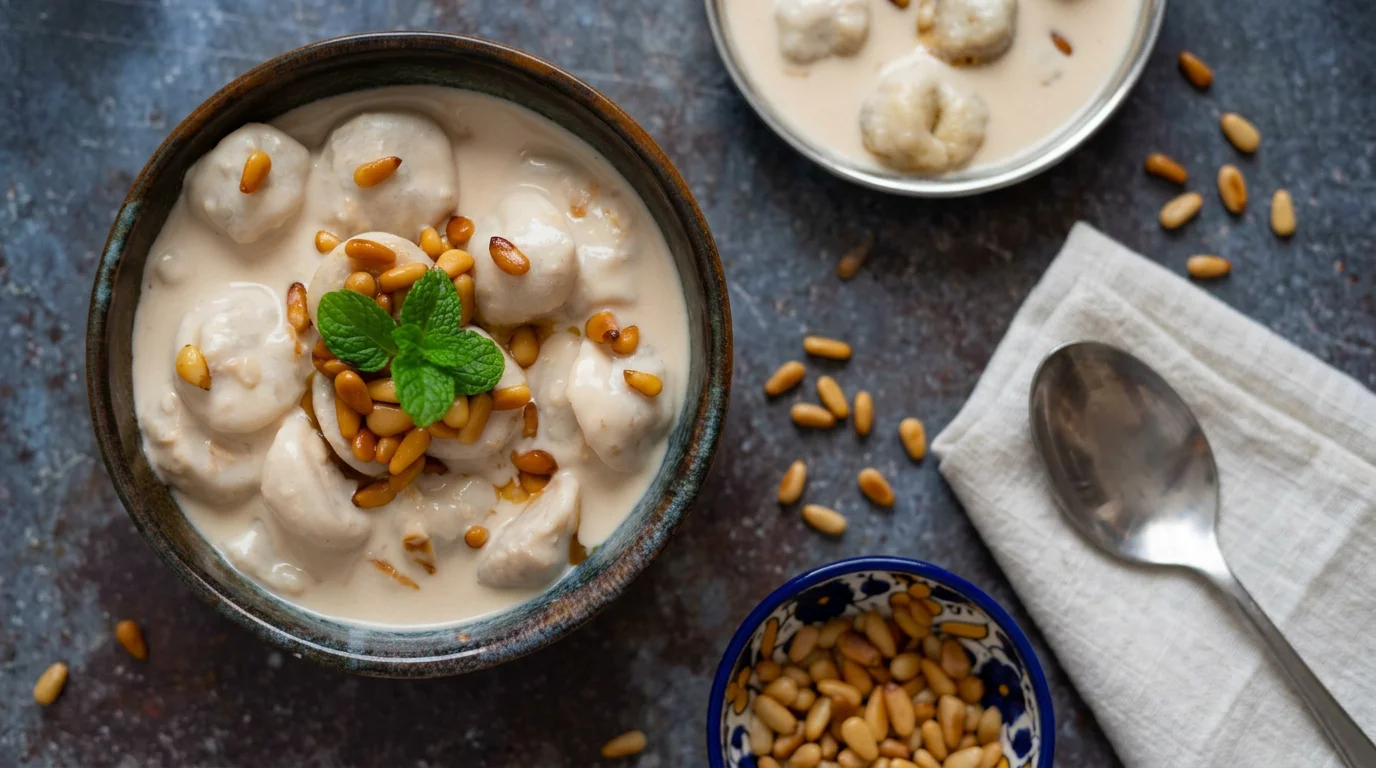
Once the yogurt sauce is boiling, carefully add the baked Shish Barak one by one, keeping them separate so they don't stick together. Lower the heat to a gentle simmer and cook uncovered for approximately 10 minutes, until the dumplings float to the surface. Optionally finish with crisped fried onions, chopped fresh parsley, and toasted pine nuts. Serve hot.