The Alchemy of Leftover Bread
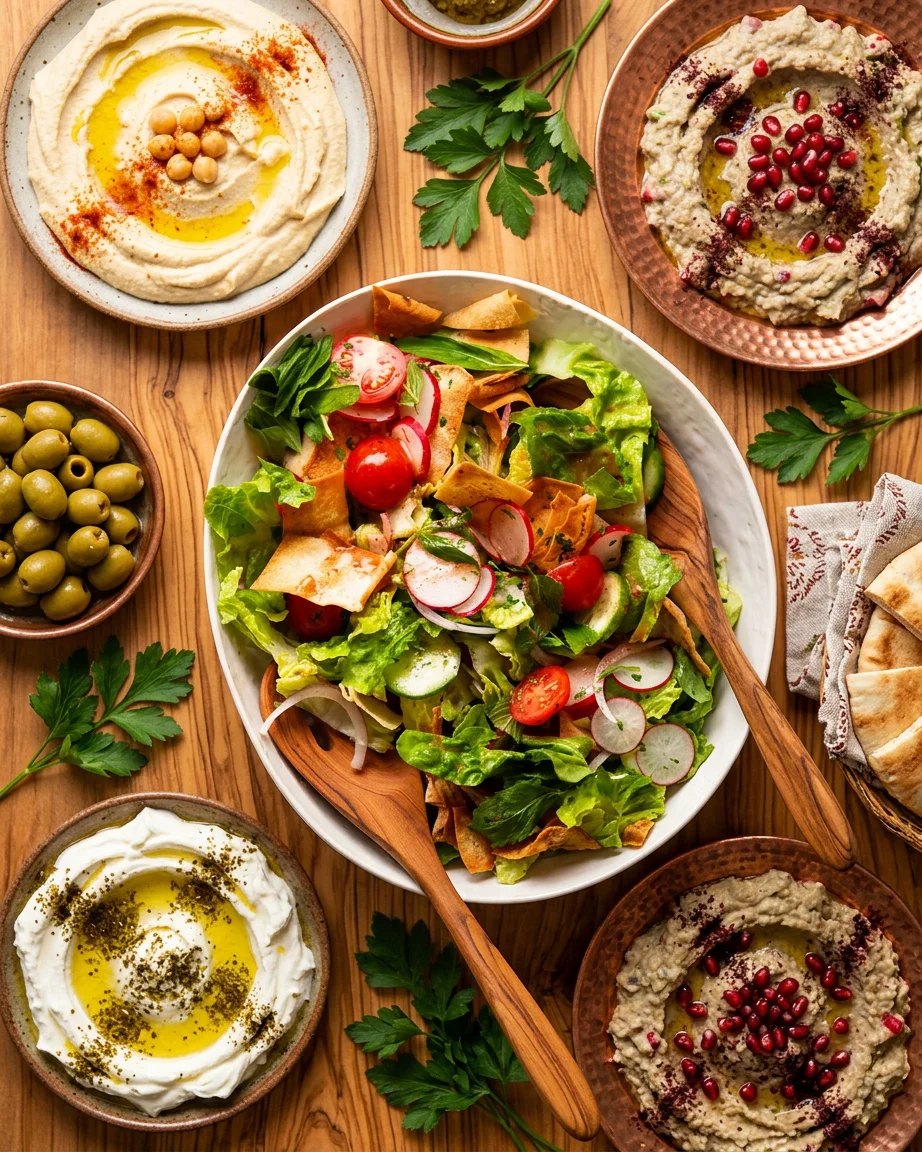
Across the Arab world, bread is never thrown away. It is torn into soups, dried for crumbs, soaked in stew, and — in the case of fattoush — toasted until golden and tumbled into the best salad you will ever eat. The word fattoush itself comes from the Arabic fatt, meaning to crumble or break into pieces, a name that tells you everything about where this dish began.
What began as a solution — use the bread before it goes stale — became a tradition. And what is remarkable about fattoush is that the bread is not a supporting player. Once toasted and dressed, it becomes the whole point: golden, soaking up just enough of the lemony sumac dressing to soften at the edges while staying crisp at the center.
🫓 Serving tip: Add the toasted pita at the very last moment before serving. This preserves its crunch — though some prefer to let it soften slightly in the dressing, which is equally traditional.
What Makes Fattoush, Fattoush
- 🌿 Sumac — the ground, dried berry that gives fattoush its signature tartness. You’ll find it both in the onion marinade and scattered over the finished salad.
- 🍋 Pomegranate molasses — a thick, sweet-tart syrup that deepens the dressing with a rich fruitiness. Even a teaspoon changes the whole character of the dish.
- 🫓 Toasted pita — the defining element. Crispy, golden, and just enough to soak up the dressing without going soggy. Day-old bread works best.
- 🌱 Purslane — a traditional ingredient that adds a mild, lemony note. Increasingly hard to find in Western markets, but worth seeking out when it’s in season.
The Story
There is an old Arabic proverb: “generosity comes from what is already at hand.” That spirit lives at the heart of every Middle Eastern kitchen, where even the simplest ingredients are treated with care and gratitude. Fattoush may be the purest expression of that tradition — a beloved salad said to have originated in northern Lebanon, created from pieces of yesterday’s bread left to dry rather than thrown away. What might have been wasted was transformed into something people find genuinely comforting — a dish people now travel across cities just to enjoy.
“Generosity comes from what is already at hand.”
The salad belongs to the wider family of dishes built around stale bread — a category that spans cultures and centuries, from Italian panzanella to Egyptian feteer. But fattoush has its own particular personality: brighter, more herbaceous, and defined by the tartness of sumac in a way that is immediately recognizable and deeply Levantine.
The key technique in this version — one that separates good fattoush from great fattoush — is marinating the sliced onion separately before anything else goes into the bowl. Combined with sumac, a pinch of allspice, and a spoonful of pomegranate molasses, the onion softens and loses its sharpness, becoming something sweeter, more complex, and far more pleasant to eat raw. Everything else is then added on top of this fragrant base, which becomes the quiet foundation of the whole dish.
This is a salad that rewards improvisation. Purslane, when you can find it, adds a mild lemony succulence that is impossible to replicate — but the salad is excellent without it. Use romaine for its sturdy leaves and clean flavor. Add more herbs than you think you need. And always finish with a generous dusting of sumac, which blooms against the bright vegetables and makes the whole bowl look exactly as it should.
Making It Your Own
Fattoush is one of the most forgiving salads in the Levantine repertoire. Within reason, almost anything goes.
- On the lettuce: Romaine is traditional and holds up best, but a sturdy leaf lettuce works fine. Avoid anything too delicate — it will wilt before you finish dressing the bowl.
- On the purslane: Found at Middle Eastern grocery stores and farmers’ markets in summer. If unavailable, simply omit it — the salad doesn’t suffer. A few extra sprigs of mint make a reasonable substitute for its lemony freshness.
- On the bread: The pita can be fried in olive oil instead of oven-toasted for a richer, slightly more indulgent result. Both are eaten across the region.
- On the dressing: Some cooks add a small spoonful of pomegranate seeds alongside the molasses, which adds color and texture. A clove of crushed garlic in the dressing is another common variation.
How to Make It
Toast the bread
Preheat the oven to 375°F. Place the pita on a rack or baking sheet and toast for 8–10 minutes, until deeply golden and fully crisp throughout. Day-old bread works particularly well here — it dries more evenly and takes on a better color. Remove from the oven, let it cool completely, then break or cut into bite-sized pieces.
Marinate the onion
Place the finely sliced red onion in a large bowl. Add half a teaspoon of sumac, a pinch of salt, a pinch of freshly ground allspice, and the teaspoon of pomegranate molasses. Mix well and set aside for at least five minutes. This brief rest draws out the onion's sharpness and turns it into something mellow, fragrant, and deeply savory — the quiet foundation of the whole salad.
Add the vegetables and herbs
Add the chopped romaine, parsley, purslane (if using), tomatoes, cucumbers, mint, and radishes to the bowl with the marinated onion. Use a light hand at this stage — you want the vegetables to remain distinct rather than compressed.
Dress and season
Add the fresh lemon juice and olive oil. Season with salt and freshly ground pepper. Toss gently but thoroughly, tasting as you go — the salad should taste bright and a little tangy, with the herbs coming through clearly. Adjust lemon or salt as needed.
Finish and serve
Scatter the toasted pita pieces over the top and dust generously with the remaining teaspoon of sumac. Serve immediately, while the bread still has its crunch — or let it rest for a few minutes if you prefer the pita to soften slightly into the dressing. Both are traditional.